

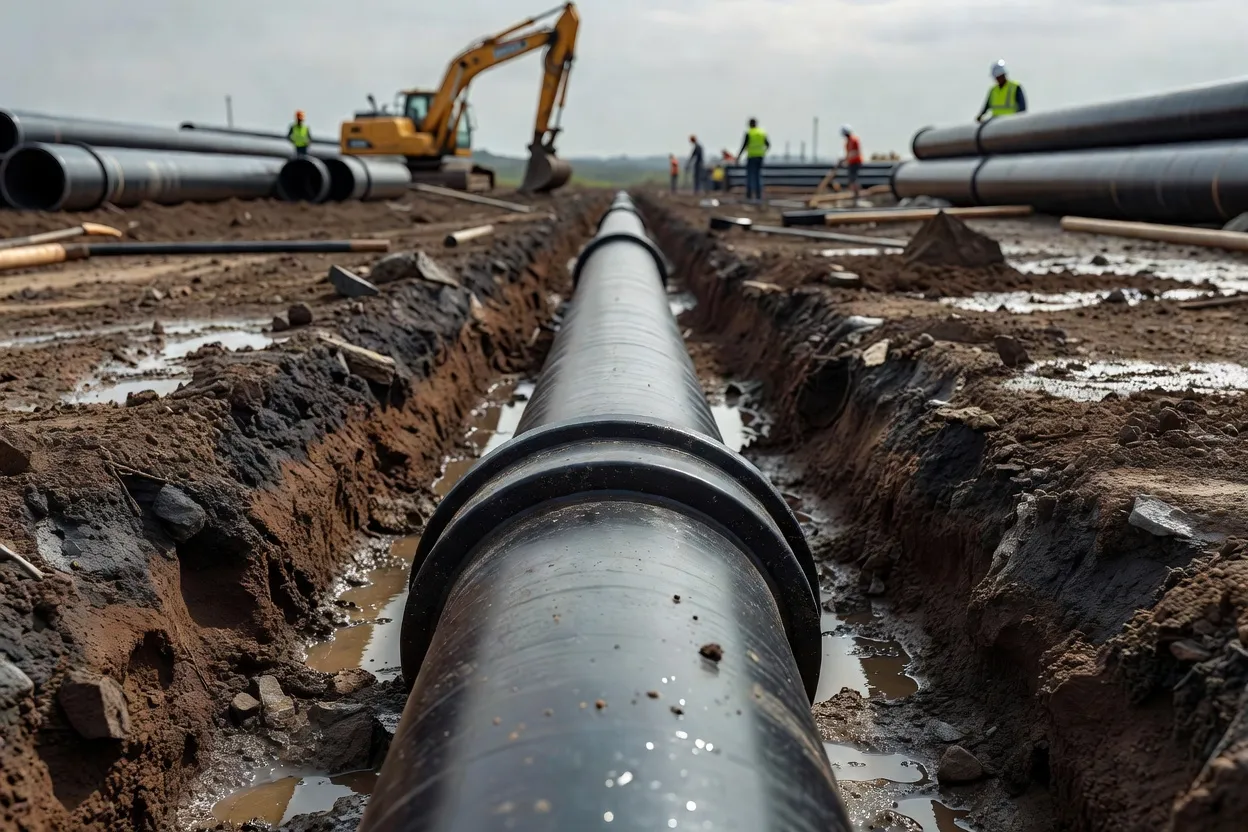
INEOS Olefins & Polymers and LyondellBasell's Equistar unit issued force majeure notices on US polypropylene in October after separate plant disruptions at Carson, California, and Lake Charles, Louisiana. The notices identify a supply interruption, not a national market balance: INEOS cited a power loss and resulting manufacturing failures, while LyondellBasell cited an uncontrollable gearbox failure that limited extrusion capacity and affected some grades.
That distinction matters. The notices establish that selected polypropylene availability tightened at two producers, but they do not establish a nationwide production loss, a uniform grade shortage, or a confirmed duration. Buyers should treat the event as a grade-and-supplier problem until operating status and allocation terms become clearer.
The two plant failures
INEOS said its Carson facility lost power, causing manufacturing failures and prompting the company to declare force majeure on polypropylene products. The producer said it was working to restore capacity as quickly and safely as possible. No restart window is on the notice.
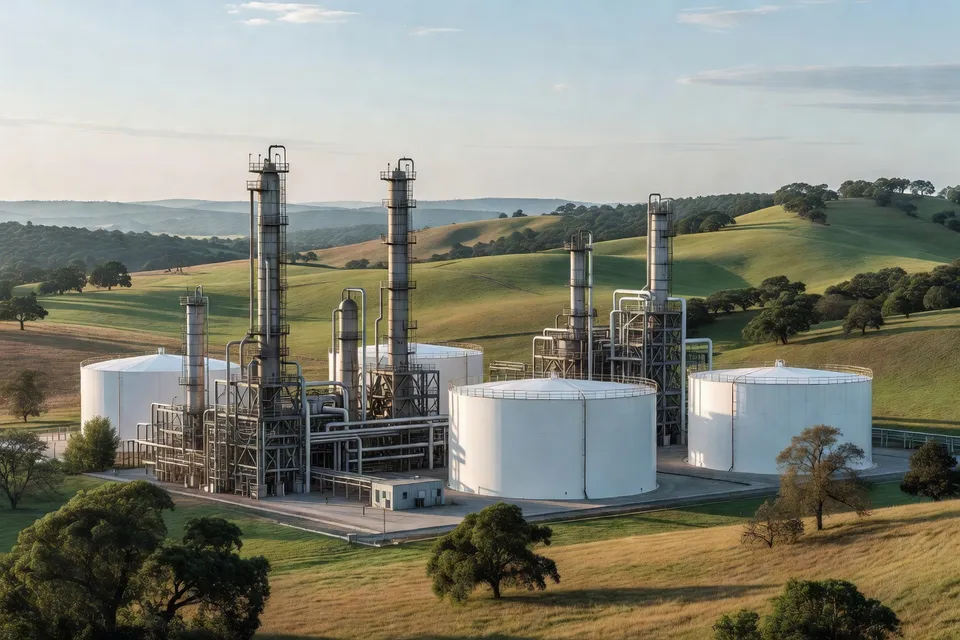
LyondellBasell reported a different constraint at its Lake Charles, Louisiana, operation. Its Equistar subsidiary attributed the disruption to a mechanical gearbox failure. The failure affected PP extrusion capacity and limited production of certain grades. That wording is narrower than a statement covering all polypropylene output, but it is commercially more relevant to converters buying the affected grades than to the market in aggregate.
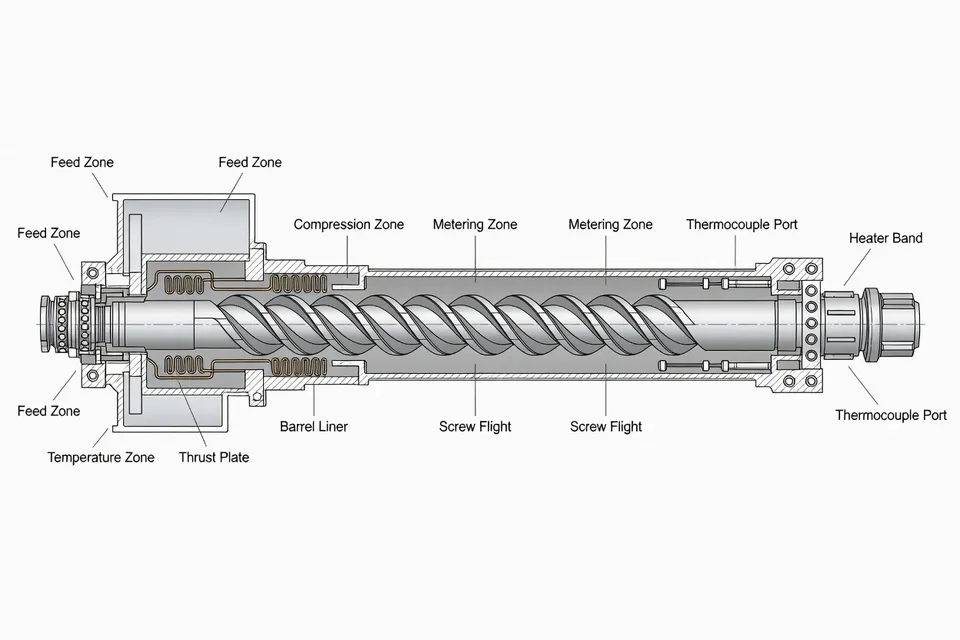
The notices therefore cannot be combined into one undifferentiated loss. One event follows a power interruption; the other follows mechanical damage. One producer describes force majeure on its polypropylene products, while the other specifies limits on extrusion capacity and selected grades. The operational evidence supports tighter availability, but not a calculated national shortfall.
The public report describing the notices also states that the US spot market reached its highest level since 2022, with homopolymer at $1.02 per pound and copolymer at $1.12 per pound. Those prices were presented alongside recovering downstream demand and tight supply. They are market prints, not producer replacement costs or a measure of the volume unavailable from Carson and Lake Charles.
US Polypropylene Spot Prices, October 2026
| Grade | Price (USD/lb) |
|---|---|
| Homopolymer | 1.02 USD/lb |
| Copolymer | 1.12 USD/lb |
| US polypropylene spot product | Reported price | Reference period |
|---|---|---|
| Homopolymer | $1.02/lb | October 2026 |
| Copolymer | $1.12/lb | October 2026 |
Copolymer carried the higher reported spot price, but the spread does not show whether the gearbox failure or the power loss caused that difference. Grade availability, contract position, and buyer urgency remain separate variables.
What the notices do not prove
The available evidence does not support ranking the two incidents by lost tonnage. No outage volume, utilization rate, or duration is attached to either notice. Capacity figures mentioned in the reporting refer to older production assets and associated polyethylene units, not a verified combined polypropylene loss from the two affected sites. Using those figures to quantify the force majeure would overstate what the notices establish.
Nor does the price report convert a local disruption into a national benchmark. A spot increase can reflect replacement buying, inventory policy, import economics, or delayed deliveries. It can also move faster than physical production changes. The defensible conclusion is narrower: two major suppliers reported operational constraints while US spot PP was described as tight and expensive relative to the period cited.
That is enough to change purchasing behavior. Converters with exposure to the affected grades will need confirmation of allocation, alternate-grade qualification, and delivery timing. A buyer that treats the notices as a generic market shortage may pay for scarcity that does not apply to its polymer family. A buyer that treats them as isolated plant problems may miss a short-term loss of substitution flexibility.
Dow's quarter is a separate signal
Dow's third-quarter results provide market context, but not a direct measure of the polypropylene disruptions. Dow reported third-quarter net sales of $11.3 billion, up 13% year over year, while volume declined 1%. Local price increased 14%, and operating EBIT rose to $887 million from $180 million a year earlier. The company attributed the improvement primarily to higher prices and self-help actions.
Dow's Packaging & Specialty Plastics business reported higher sales driven by polyethylene and functional polymers prices in all regions. Polyethylene demand remained resilient, with year-over-year volume growth excluding supply constraints associated with the Middle East conflict. Those figures describe Dow's broader chemicals and polyethylene exposure; they do not quantify US polypropylene availability and should not be used as a proxy for the Carson or Lake Charles outage.
The separation is commercially useful. Dow's price and earnings improvement shows that producers can recover margin when pricing strengthens, but it does not confirm that the US PP market has moved into a durable shortage. The force majeure notices are plant-specific evidence. Dow's quarter is financial evidence from a different product mix and cannot close the operational gap.
The next test is operational
The market will need three disclosures to determine whether October's notices become a sustained supply event: a restart or recovery update from INEOS, a repair and grade-availability update from Equistar, and evidence of whether spot premiums persist after replacement cargoes and inventories respond.
Until then, the strongest conclusion is also the narrowest. US polypropylene supply was disrupted at two facilities, and reported spot prices reached levels last associated with 2022. The notices justify tighter procurement controls and grade-by-grade confirmation. They do not yet justify a national loss estimate or a long-term price forecast.
The next meaningful data point is the producers' operating update: when Carson returns to normal production and when Lake Charles restores the affected extrusion capacity.
Editorial Insights
- How should a buyer determine whether a force majeure notice affects the grade actually being consumed?
- Ask for the producer’s allocation statement by grade code, not a general confirmation that polypropylene is tight. Match that list against the approved grade, homopolymer or copolymer family, required delivery window, and current contract position. A notice tied to selected extrusion capacity may leave other grades available, while replacement buying can make an unaffected grade look scarce. The usual mistake is treating a producer-wide headline as permission to pay a premium for material that was never constrained.
- What evidence is needed before treating the reported spot price as a valid replacement cost?
- Refuse to use one spot print as the replacement-cost budget. Check the quoted grade, location, freight basis, quantity, delivery date, payment terms, and whether the offer is firm or merely an assessment, then compare it with import parity and available contract supply. A higher copolymer indication does not prove that either plant failure caused the spread. Buyers often mistake an urgent truckload quote for a market-wide benchmark and then lock in scarcity after the physical constraint has eased.
- What should be completed before switching production to an alternate polypropylene grade?
- Run the alternate through the existing qualification sequence: confirm the technical data sheet and CoA requirements, conduct lab and dimensional checks, then approve a controlled production trial under the documented process window. Verify melt flow, impact or stiffness requirements, additive package, color response, and downstream settings rather than accepting a nominally similar grade. A second source can match melt flow and still change fill, cycle time, weld-line behavior, or scrap. Purchasing approval alone is not a material qualification.
- Which operating updates would show that the disruption is becoming a sustained supply event?
- File three updates separately: the Carson restart status, the Lake Charles gearbox repair and affected-grade availability, and actual delivery performance after replacement cargoes or inventories respond. Track confirmed allocation, promised ship date, shipped quantity, and open-order aging by grade. Do not convert an old capacity figure into an outage estimate; without duration, utilization, or lost-tonnage data, that calculation is not defensible. The failure mode is allowing a force majeure notice to remain the only status field in the buying system.
- How should inventory coverage change while grade availability and restart timing remain uncertain?
- Set coverage by approved grade and confirmed allocation, not by a single polypropylene days-of-supply number. Separate firm receipts from unconfirmed promises, reserve material for critical orders, and review the plan as producer updates arrive. Extra resin protects against a delivery gap only if it is the correct grade and remains within its storage and quality limits. The common error is building broad inventory against a general shortage while still lacking the specific copolymer or process grade the line requires.
References
- 1.Min News. (2026, October 28). Two PP factories declare force majeure! ExxonMobil 1 plant shuts down, 1 factory strikes. Min News.
- 2.ChemNet. INEOS Bayport ethylene oxide plant declares force majeure. ChemNet.
- 3.Plastics News. Polyethylene pricing, cost cuts lift Dow’s results. Plastics News.
- 4.Dow. Dow reports third-quarter 2026 results. Dow Investor Relations.
- 5.Benzinga. Dow Q3 2026 earnings call transcript. Benzinga.
- 6.GuruFocus. Dow Inc. (DOW) Q3 2026 earnings call highlights: Double-digit sales growth and $1.3 billion self-help tailwind. GuruFocus.
- 7.ChemOrbis. Asia propylene rally pauses at 6-month highs as traders cover shortfalls. ChemOrbis.
- 8.ICIS. Polypropylene. ICIS.