


A Morocco case study puts solar thermal energy beside rotational molding's hardest operating constraint: the process needs sustained heat, and a lower-carbon heat source does not by itself prove a shorter or less energy-intensive cycle. The available description identifies solar thermal energy as a possible route to reduce emissions and energy costs, but it does not provide a verified before-and-after kilowatt-hour result, a mold temperature profile, or a closed production trial.
That distinction matters on a rotomolding line. A processor can reduce burner demand while still carrying the same thermal load through a longer heat-up, slower gelation, or extended cooling period. The relevant measurement is not simply the heat source. It is energy per accepted part, tied to a defined mold, resin grade, charge weight, oven temperature, rotation schedule, and release condition.
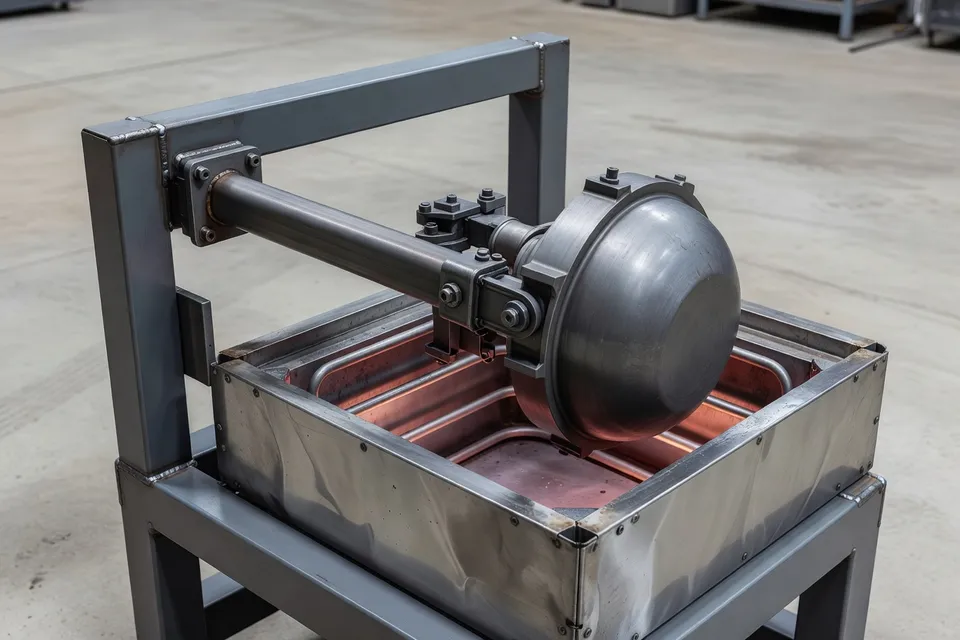
The solar heat case
The Morocco study is useful because it frames solar thermal equipment against the actual demand of roto molding rather than treating renewable electricity as a generic factory purchase. Solar heat must reach the process at a usable temperature and remain available through the oven cycle. That makes storage, backup heating, heat-transfer losses, and production timing part of the plant result.
The study description says solar thermal energy could cut emissions and energy costs if it can meet the process's high heat demand at acceptable cost. That is a feasibility statement, not a measured line result. No verified cycle-energy baseline appears in the available page material, and no new value is given for energy per part. A maintenance lead therefore has no basis to approve a lower setpoint solely from the case study.
For a trial, the first control point should be the polymer's melt and fusion behavior inside the mold. Oven air temperature is only one signal. The processor needs a temperature trace from the mold or load, the time to reach the required internal condition, and the time required for cooling before demolding. The same instrumenting must be used at the baseline and at the proposed lower-temperature condition.
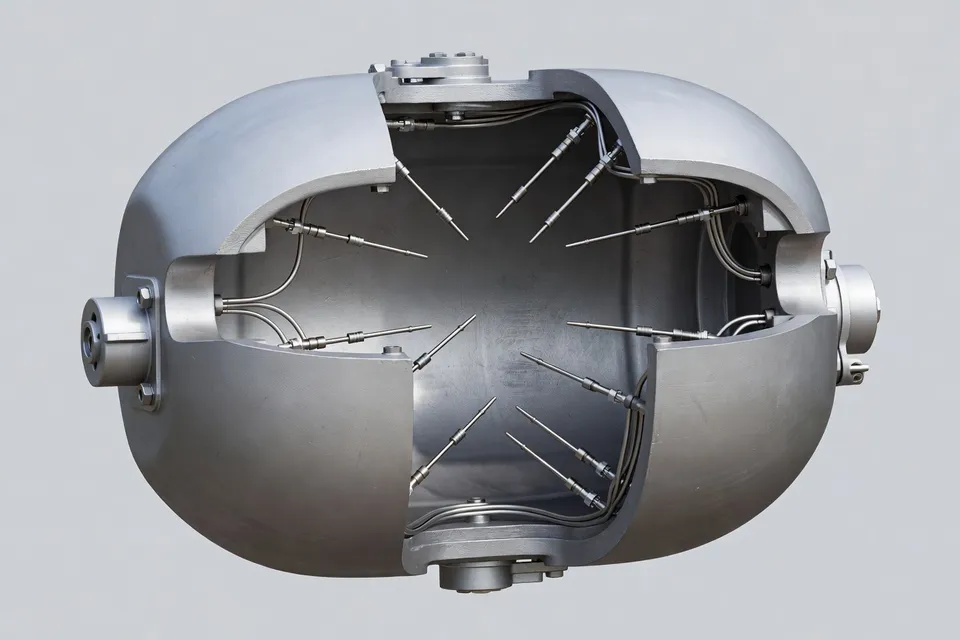
The cycle, not the burner
Lowering the oven setpoint can reduce heat input, but it can also move the failure elsewhere. Incomplete fusion, thin spots, bubbles, warpage, poor impact performance, and dimensional drift may appear after the part leaves the oven. A line that saves fuel but sends more parts to regrind has not demonstrated a cycle-energy gain.
The supplied material on cooling design in injection molding reinforces the measurement problem without proving a rotomolding result. Uneven cooling creates internal stresses and can produce warpage. Rotomolding does not use the same mold-filling and cooling arrangement as injection molding, so the method cannot be transferred automatically. The practical point still holds: temperature uniformity and cooling history belong in the acceptance plan.
The injection-molding guidance on cooling channels and warpage fixes is therefore background, not evidence that a rotomolding cycle can run colder. Those pages describe another process, with different heat-transfer paths and part-formation mechanics. They cannot supply the missing rotomolding baseline.
What QA should refuse
QA should refuse a lower-temperature change when the only evidence is a fuel or solar-heat claim without part-level measurements. The release package should include the baseline and trial lot, resin identification, charge weight, mold identification, oven profile, rotation speed, internal temperature trace, cooling time, part weight, wall-thickness checks, dimensions, and mechanical or functional tests required for the product.
The failure modes need to be recorded, not averaged away. A mean energy number can hide a small number of underfused parts, and a mean cycle time can hide a cooling extension that offsets the heat-up saving. The acceptance decision should therefore use energy per accepted part and retain scrap, rework, and delayed-release quantities as separate fields.
The relevant comparison is straightforward once the lot is defined:
| Measurement | Baseline | Lower-temperature trial |
|---|---|---|
| Energy per accepted part | Not reported | Not reported |
| Cycle time | Not reported | Not reported |
| Solar thermal contribution | Not reported | Not reported |
| Quality release result | Not reported | Not reported |
Nothing moved in the published evidence because no paired production measurements were supplied. That does not make the solar approach impractical; it sets the limit on what can be claimed.
The next lot
The next useful step is a controlled trial on one mold and one resin grade, with the conventional heat cycle retained as the baseline. The plant should run enough parts to capture startup variation and normal cooling scatter, then compare energy per accepted part rather than burner output alone. The trial should stop if fusion, wall thickness, dimensions, impact performance, or release timing crosses the existing QA limit.
The Morocco case earns a place in the trial queue because it addresses the heat demand that makes rotomolding energy-intensive. It does not yet earn a production claim for lower cycle energy. That claim belongs to the trial lot, the meter data, and the QA release record—not to the heat source on its own.
Editorial Insights
- What should the plant measure before calling a lower-temperature rotomolding cycle an energy saving?
- Measure energy per accepted part, not burner output alone. Fix one mold, resin grade, charge weight, rotation schedule, oven profile, cooling method, and release condition, then record the internal temperature trace and the full cycle. The common failure is to count reduced heat-up demand while ignoring slower fusion, longer cooling, scrap, or rework; that produces a lower fuel number but not a lower manufacturing energy cost.
- Can QA approve a lower oven setpoint from a solar-thermal feasibility study alone?
- No. QA should require a paired baseline and trial lot with resin identification, mold identification, charge weight, oven profile, rotation speed, internal temperature trace, cooling time, dimensions, wall thickness, and the required mechanical or functional tests. A modeled solar contribution can justify a controlled trial, but it cannot release a production setting without part-level evidence.
- Why is oven air temperature a poor standalone control point in rotomolding?
- Ask for the mold or load temperature trace and the time to reach the required fusion condition. Oven air temperature does not show whether polymer melt and gelation are uniform through the part, and it says even less about cooling before demolding. A lower setpoint can leave thin spots, bubbles, poor impact performance, warpage, or dimensional drift even when the oven display looks stable.
- What must be included in the approval package for a lower-temperature trial?
- File the baseline and trial lot records together, including the grade code, lot information, mold and charge details, oven and rotation settings, internal temperature trace, cooling time, part weight, wall-thickness checks, dimensions, and release-test results. Keep scrap, rework, delayed release, and accepted parts as separate fields rather than hiding them in an average. The usual mistake is approving a mean energy reduction while a small population of underfused parts remains in the lot.
- How should a plant structure the first production trial?
- Run one mold and one resin grade with the current heat cycle as the baseline, then test the proposed lower-temperature condition under the same measurement method. Include enough production to capture startup variation and normal cooling scatter, and stop if fusion, wall thickness, dimensions, impact performance, or release timing crosses the existing limit. Do not scale the setting because the first few parts look acceptable.
- What can solar thermal integration realistically improve before it proves a shorter cycle?
- It can reduce the conventional heat source’s demand or emissions if usable heat is available through the required process window, but that does not establish a shorter cycle or lower energy per accepted part. Storage, backup heating, heat-transfer losses, solar availability, and production timing still belong in the operating plan. A plant can displace burner input and retain the same thermal load through longer heat-up or cooling; the meter and QA release record must settle that question.
References
- 1.Dave Sullivan. (2026, October 27). Turning down the heat. Canadian Plastics.
- 2.Plastics Engineering. (2026, October 29). Solar energy for rotational molding: A case study from Morocco. Plastics Engineering.
- 3.Plastics Engineering. Automotive shredder residue targets concrete applications. Plastics Engineering.
- 4.Lilli Manolis Sherman. (2026, October 27). October 2026: A mostly flat-to-down price trajectory for volume resins. Plastics Technology.
- 5.Plastics Engineering. New era of extrusion machine AI to smart factory. Plastics Engineering.
- 6.Induscor Partners. Operational excellence in plastics and composites plants: EBITDA, PPWR, and circular economy. Induscor Partners.
- 7.Plastics Engineering. Cooling design in injection molding. Plastics Engineering.
- 8.PubMed Central. PMC11991609. PubMed Central.
- 9.Manufyn. Cooling channels. Manufyn.
- 10.Aprios. Injection molding defects: Warping causes and fixes. Aprios.