

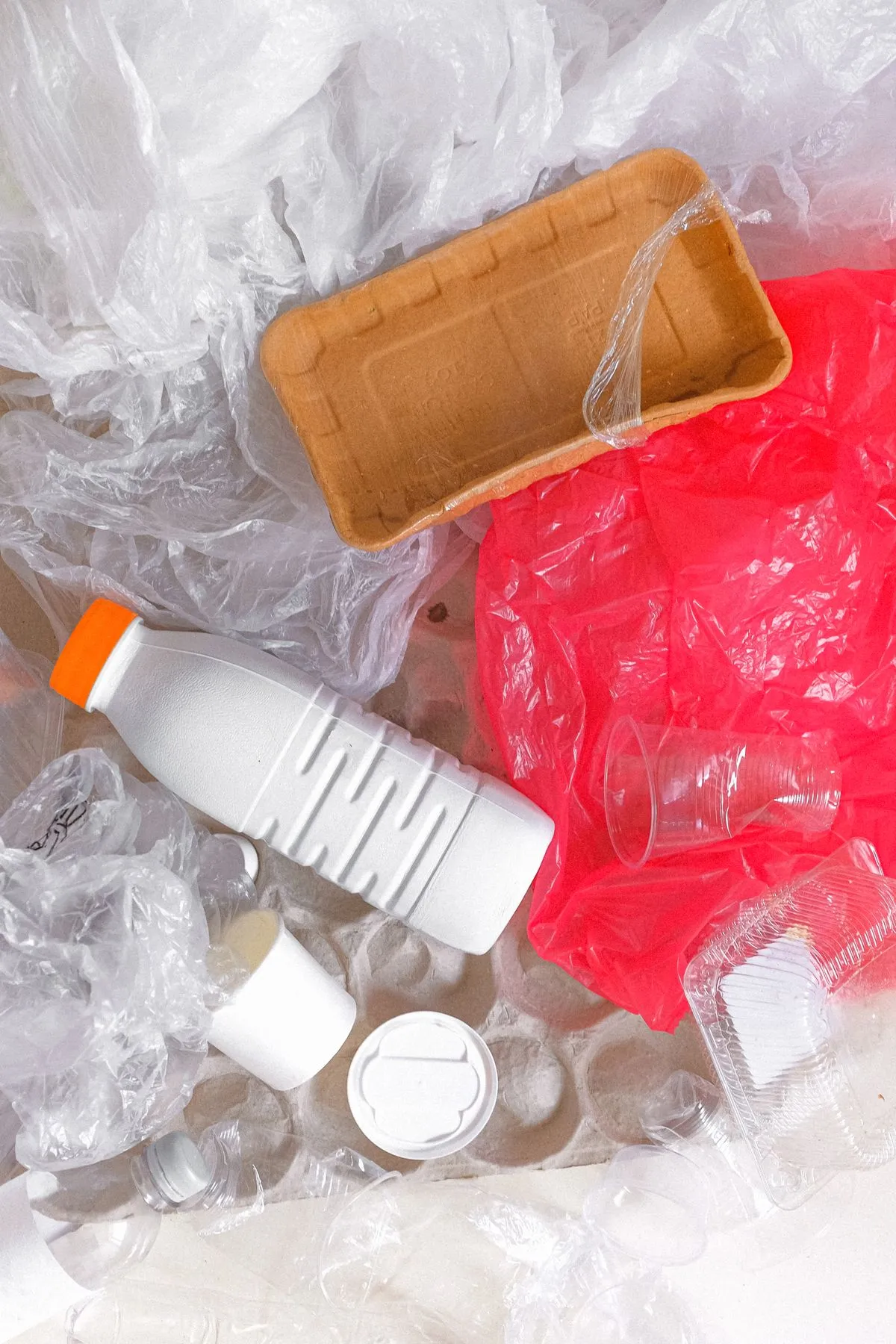
A pair of recycling demonstrations put useful numbers on a problem that processors usually meet before the extruder: the feedstock is not clean enough, and the sorter has to decide what belongs in the bale. PROSPER's second large-scale trial, run with the National Test Centre Circular Plastics in May 2026, separated bio-based rigid plastics and films from conventional packaging. Rigid biopolyester reached a 93% yield, while the PLA stream reached 93% purity. Films remained the weak point, producing 45% yield at about 75% purity after one optical sorting step.
That split matters. A high rigid-plastics result does not close the film loop, and a sorter claim is not the same thing as approved resin at the pelletizer. The trial established separation performance. Washing, further cleanup, and mechanical or chemical recycling still have to prove that the recovered material meets the buyer's specification.
The bio-based trial lot
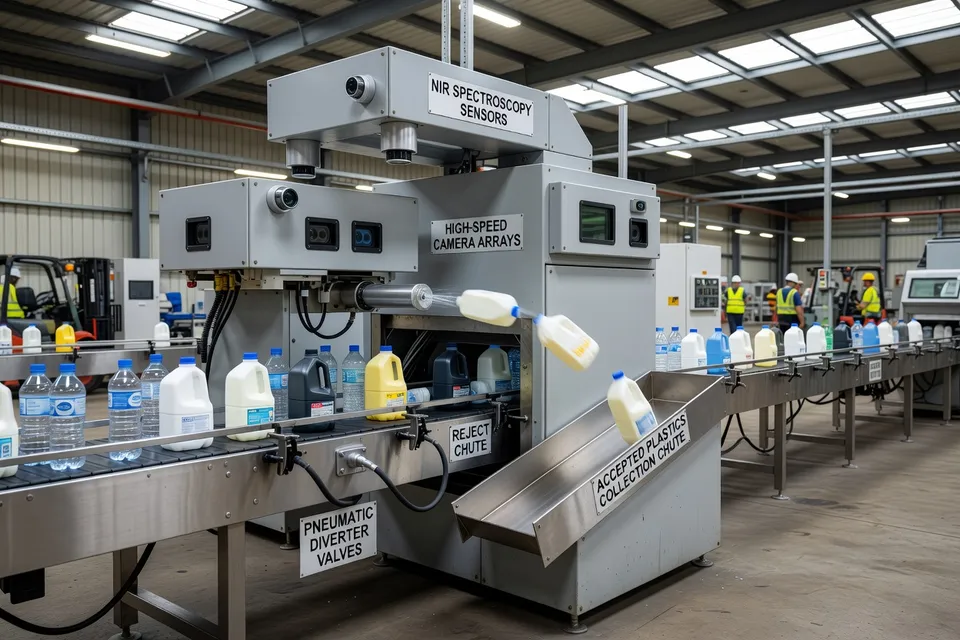
PROSPER trained near-infrared identification with vision classification and added a dedicated film sorter for the May trial. The line handled bio-based films and rigids alongside conventional PET and PE packaging. The test followed an earlier July 2025 trial that established the basic detection method, so the later result represents a refinement of the sorting chain rather than a first laboratory observation.
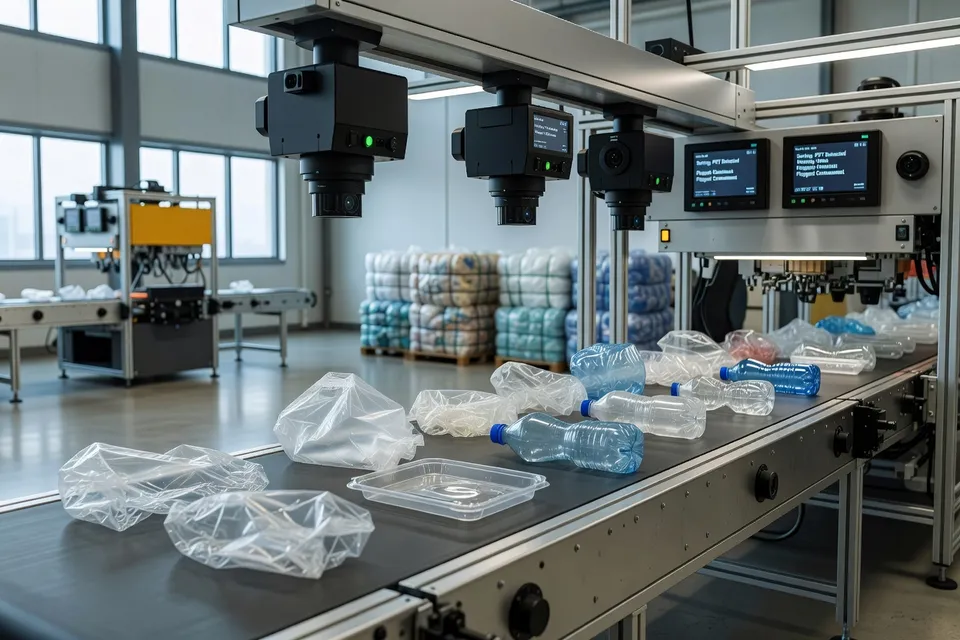
The reported rigid results are strong enough to justify the next plant test, but they need to be read by stream. The biopolyester rigid fraction achieved 93% yield, while its reported purity was around 80%. The PLA stream reached 93% purity. Those figures do not describe one common output, and they should not be blended into a single recovery rate. PROSPER expects an additional cleanup step to raise the biopolyester rigid purity.
| Stream measured in the May 2026 trial | Result |
|---|---|
| Biopolyester rigids | 93% yield |
| PLA | 93% purity |
| Biopolyester rigids | Around 80% purity |
| Bio-based films | 45% yield; around 75% purity |
Bio-based plastics sorting yields and purities, May 2026
| Category | Percentage (%) |
|---|---|
| Biopolyester rigids yield | 93 % |
| Biopolyester rigids purity | 80 % |
| PLA purity | 93 % |
| Bio-based films yield | 45 % |
| Bio-based films purity | 75 % |
The film result is the refusal point for a plant manager. At 45% yield, a single optical pass does not yet support the same confidence as the rigid stream. The project says standard industrial cleanup and recovery stages could improve the film result, but that is a next-step expectation, not a closed commercial output.
The next measurements are already assigned. Trials are planned at waste facilities operated by A2A in Italy, SUEZ in France, and FCCMA in Spain. Those runs will show whether the classification method survives ordinary facility conditions, variable bale composition, and the handling losses that pilot work can suppress. PROSPER also plans pretreatment work, including washing, before advancing mechanical and chemical recycling with material recovered from real waste streams.
The film line in Vilnius
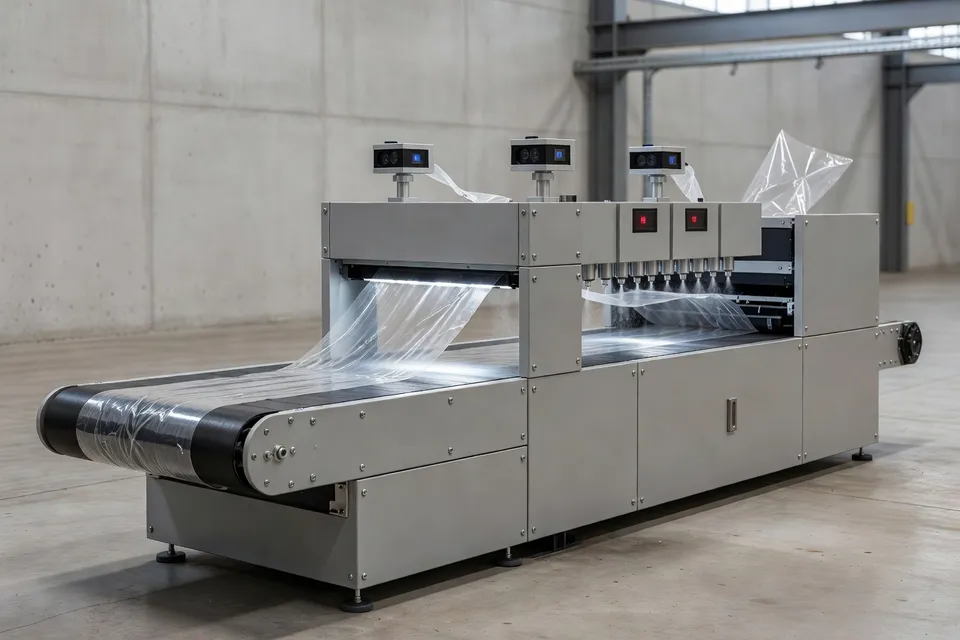
AB Plasta (a CEDO Group film recycler operating in Vilnius, Lithuania) commissioned a flexible-film recycling line in July 2026 with Tomra Recycling. The line combines input preparation, four Autosort Speedair units, digital monitoring through Tomra Insight, and a final sorting stage intended to recover remaining polyethylene fractions.
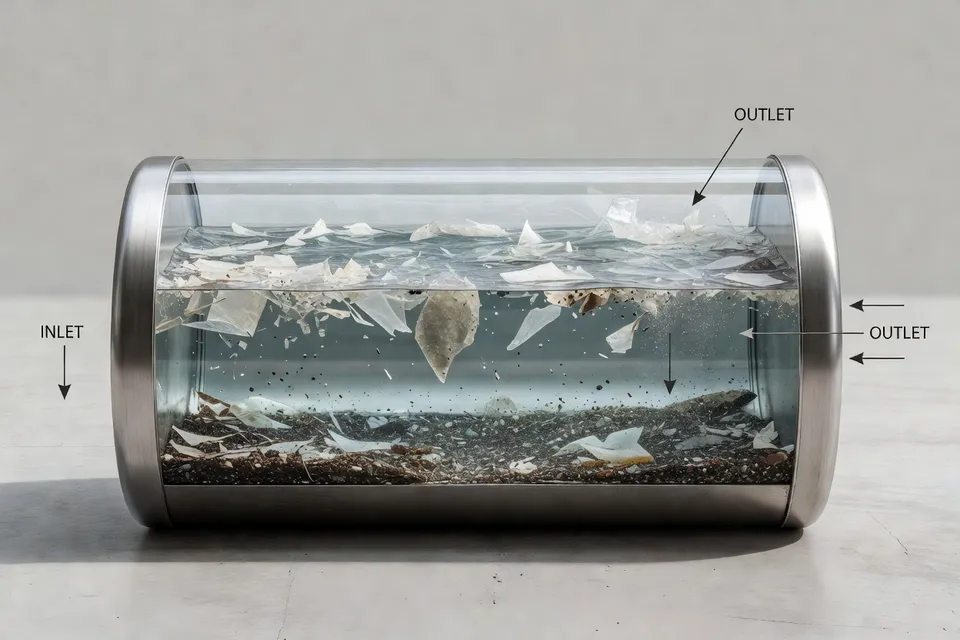
The company reports overall recovery efficiency of approximately 90%. That is a plant-line claim, not a published mass balance showing every input, reject, moisture loss, and pellet output. The process description is more useful than the headline percentage for anyone checking transferability: optical sorting is followed by wet mechanical processing, washing, flotation separation, drying, extrusion, and regranulation into PE recyclates with defined quality parameters.
The equipment choice addresses a familiar mechanical problem. Thin and irregular films move poorly on a conveyor and can evade a sensor when the material is unstable. The Speedair units are designed to stabilize lightweight film fractions so the sensors can identify and separate targeted polymer fractions, particularly PE. The additional end-of-line sorter then recovers residual PE that escaped the earlier stages.
What remains unmeasured in the reported result is just as practical. The page gives no feed composition, throughput, contaminant load, yield-by-grade table, or QA rejection rate for the regranulate. A processor considering the line would need those values before treating the approximately 90% figure as a comparable plant recovery benchmark. The washing and flotation stages also make the water load, drying energy, and reject disposition part of the operating case.
The control problem behind both trials
A 2026 technical paper on single-step identification and sorting frames the wider limitation differently: the challenge is no longer simply adding another sensor. The sorting chain has to integrate several sensing methods so it can classify individual objects without adding excessive process complexity, floor space, or operating cost. Overlapping polymer densities still interfere with separation, while European chemical-recycling capacity remains insufficient for large-scale use.
That finding supports a narrow conclusion. Better detection can reduce the wrong material entering a recycling stream, but detection alone does not create a usable recyclate. The plant still needs a defined acceptance window for polymer identity, colour, contamination, moisture, and melt performance. Neither the PROSPER trial nor the Vilnius announcement supplies a complete release specification for the final recycled product.
PROSPER's project description identifies AI-assisted sorting with more than 80% sorting accuracy as a project target or capability, but the May trial provides the more useful stream-specific evidence: 93% rigid yield, 93% PLA purity, approximately 80% biopolyester-rigid purity, and 45% film yield at approximately 75% purity. Those values should remain separate in a production review. Combining them would hide the film loss.
For QA, the immediate question is not whether a sorter can identify bio-based material. It is whether the next cleanup and washing stages produce a lot that passes the customer's agreed specification. For maintenance, it is whether film stabilization, sensor calibration, flotation, and drying hold their performance as contamination changes. For operations, it is whether the final recovery figure includes the material that reaches the extruder or only the fraction captured by the sorting system.
The evidence therefore supports two actions, not one conclusion. PROSPER has earned facility trials because its May 2026 sorting run measured separate yields and purities at industrially relevant scale. AB Plasta has demonstrated a more complete film-processing chain, but its approximately 90% recovery figure still needs a disclosed mass balance and QA data before it can be compared directly with the bio-based trial. The next defensible result will come from the planned A2A, SUEZ, and FCCMA runs, the added cleanup step, and the first released recyclate lots from real waste streams.
Editorial Insights
- Can a 93% sorting result be used as the expected output for a recycled resin line?
- No. First separate yield from purity, then trace the material through washing, flotation, drying, extrusion, and regranulation. A 93% yield for rigid material and 93% purity for PLA describe different streams, not one finished-resin performance figure. The usual failure is carrying a sorter result into a production approval without checking contamination, moisture, melt behaviour, and reject losses at the pelletizer.
- What must be disclosed before treating a film line’s recovery percentage as a plant benchmark?
- Ask for the full mass balance: feed composition, throughput, moisture, contaminant load, reject tonnage, yield by polymer grade, and QA rejection rate for the regranulate. Confirm whether the percentage ends at the sorter, the extruder, or released pellets. A headline recovery figure can look strong while washing losses, drying energy, flotation rejects, or off-spec resin remain outside the calculation.
- What should be measured during the next facility trials for optical sorting?
- Run the sorter against ordinary bale variation, not a carefully prepared feed, and record yield and purity by stream for each operating condition. Log film stability, sensor calibration, contamination, moisture, colour, and polymer identity before and after cleanup. A result that holds only on a uniform pilot feed will not establish a production window; unstable composition can change both capture efficiency and the quality of the material sent to recycling.
- When does an additional cleanup step justify moving from sorting trials to recyclate approval?
- Require a released-lot specification before scaling: polymer identity, contamination, moisture, colour, melt-performance limits, sampling method, and disposition for failed lots. Then run enough real-waste material through washing and recycling to show that the specification is repeatable, not merely achieved once. The friction is that higher purity may come with lower yield, extra water and drying demand, or a reject stream that has no practical outlet.
- Why should film sorting be reviewed separately from rigid-plastic sorting?
- Because film handling is a mechanical constraint before it is a recognition problem. Lightweight, irregular pieces can move unpredictably and evade a sensor, so a rigid-stream result cannot be transferred to the film line. Treat the reported 45% film yield and roughly 75% purity as a refusal point for commercial confidence until stabilization, further sorting, washing, and extrusion show what reaches specification. Blending the figures would hide the main loss.
- What must be owned on the line before digital monitoring or AI-assisted sorting can deliver a credible benefit?
- Name the owner of each setpoint and define the response to drift before installing the software. Sensor calibration, film presentation, acceptance limits, sampling, and change control must already be documented; otherwise a dashboard reports variation without controlling it. Maintenance still has to verify sensors, air handling, flotation, and drying, while QA confirms the released pellet—not the classification screen—meets the customer specification.
References
- 1.Circular Bio-based Europe Joint Undertaking. (2026, October 7). Sorting out the future of bio-based plastics recycling. Circular Bio-based Europe Joint Undertaking.
- 2.Deterding, L., Auer, M., Dhibi, M., et al. (2026, October 26). Single-step identification and sorting technology for recycling of plastic packaging and technical polymer products. Materials Circular Economy.
- 3.Polyformnext. Sensor-based sorting: New film recycling line achieves up to 90% PE recovery. Polyformnext.
- 4.Plastics News. SP Aliplast expands rigid plastics recycling in Italy for European supply. Plastics News.
- 5.Hera Group. Hera Group inaugurates R3GID in Modena, the new rigid plastics recycling plant. Hera Group.
- 6.Packaging Europe. Aliplast opens new rigid plastics recycling plant in Italy. Packaging Europe.
- 7.Resource Recycling. (2026, October 29). EPR at work: Sask. adds foam densifier. Resource Recycling.
- 8.Resource Recycling. (2026, October 22). Hitachi Energy partner turns spools into PVC pipe feed. Resource Recycling.