

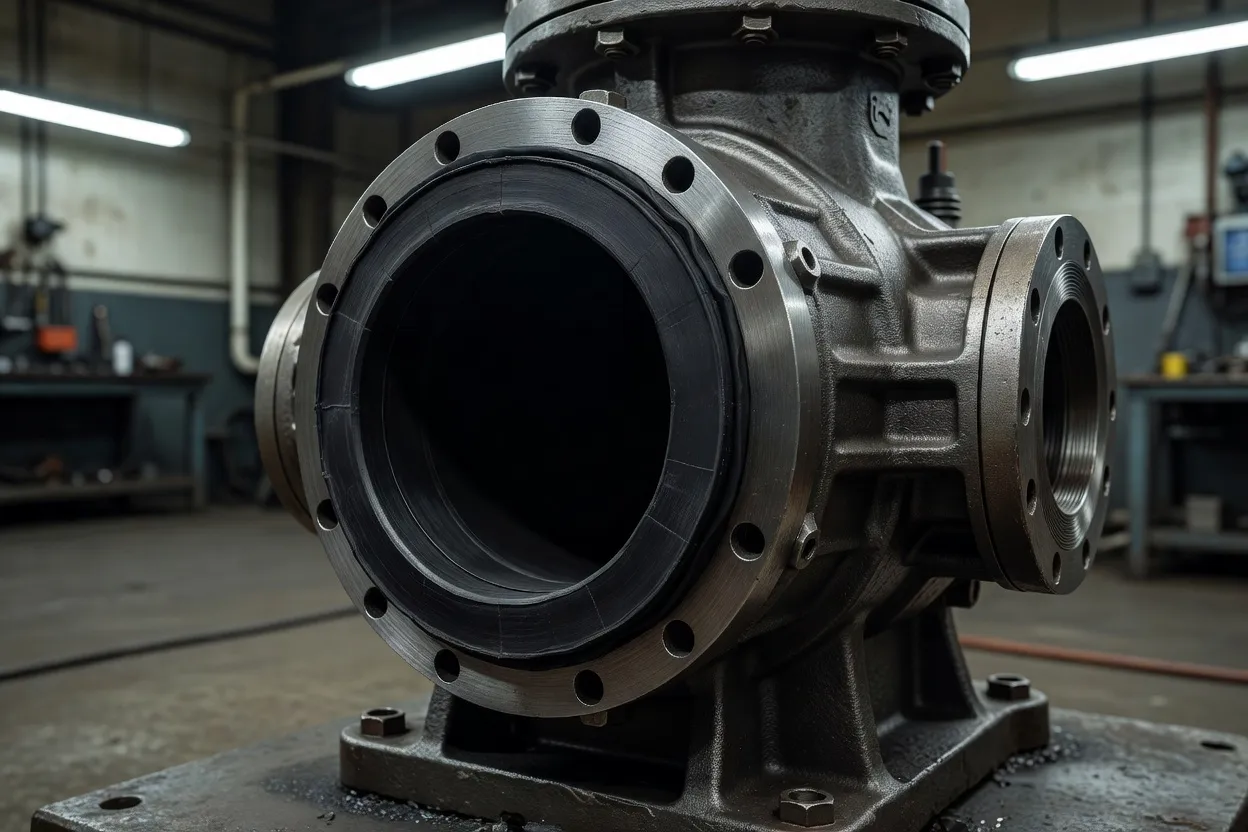
The strongest idea across this group of elastomer studies is not that every rubber can now be recycled. It is that the network architecture is being changed so the material can be taken apart, reshaped, or repaired without pretending that a permanent thermoset behaves like a thermoplastic.
That distinction matters on a production line. A conventional crosslinked elastomer gains durability from bonds that do not readily move. Reprocessing asks for the opposite: bonds that exchange under controlled heat, links that can be sacrificed while the main network carries load, or a backbone that can be depolymerized and rebuilt. Each route changes the quality-control question. The processor must know not only whether a sample survives one test, but also which bond moves first, what residue remains, and how many cycles the material tolerates before strength or dimensional stability falls outside specification.
The exchangeable network
The ACS work on dual-dynamic sacrificial networks takes the clearest route toward that control problem. The material uses two dynamic functions rather than one fixed crosslink population. One network provides the durable structure; another can rearrange or yield under the selected stimulus. In principle, that separates service life from repair or reprocessing. The network does not have to be soft simply because it is reprocessable.
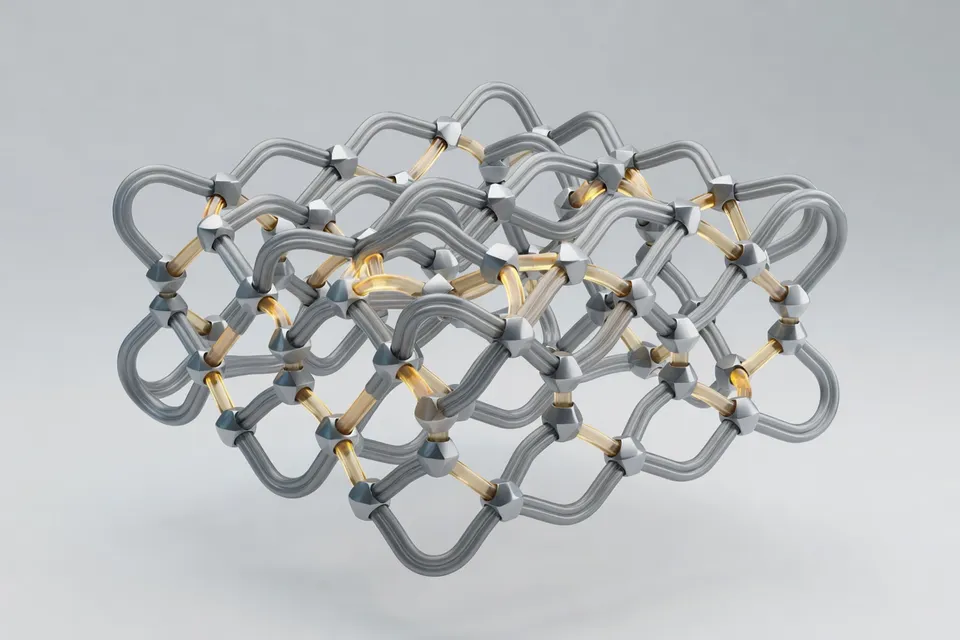
That is the useful mechanism. A materials engineer can assign one job to the load-bearing network and another to the sacrificial links. The claim still needs a processing map: temperature, dwell time, atmosphere, stress history, and the number of successful reshaping cycles. Without those data, “durable” and “reprocessable” remain adjacent properties, not a demonstrated manufacturing sequence.
A second ACS study approaches the problem through self-immolative chemistry. Its title identifies the target more narrowly: a depolymerizable and reprocessable self-immolative polymer. Instead of relying only on bond exchange inside a permanent network, the design is intended to trigger chain disassembly so the material can be recovered or rebuilt. That could simplify end-of-life separation, but it also creates a sharp operating constraint. The trigger must remain inactive during storage and use, then activate predictably during recovery.
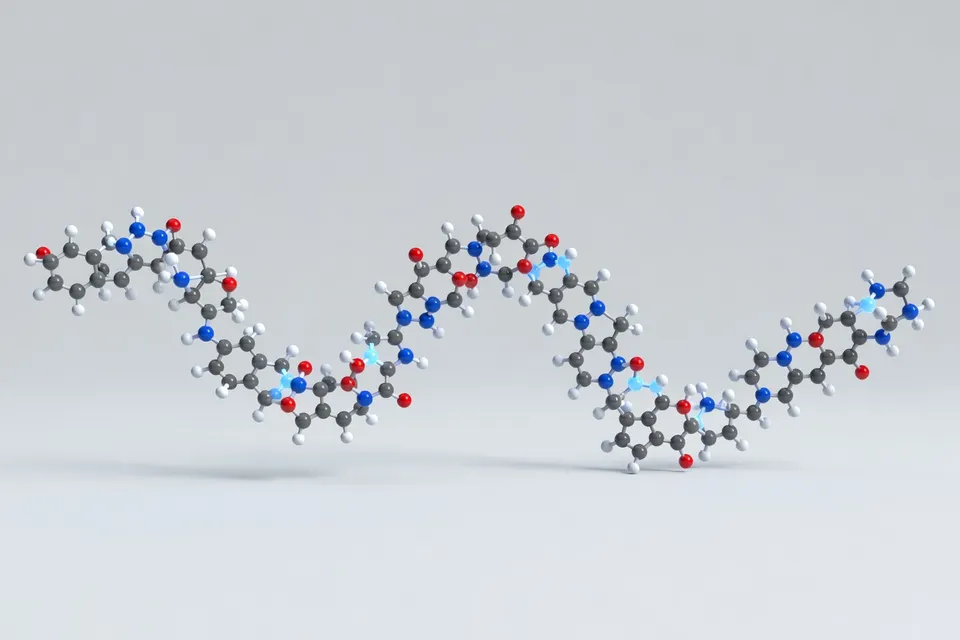
For a processor, the missing qualification is not difficult to name. The work must show that the trigger does not fire during compounding, compression molding, service heat exposure, or contact with moisture and additives. A clean laboratory depolymerization is encouraging; it is not yet a safe production window.
Soft elastomers and the feedstock question
The study on recyclable soft elastomers derived from biobased feedstocks shifts attention from network chemistry to raw-material origin. A biobased monomer can reduce fossil feedstock demand, but it does not automatically make the finished elastomer recyclable. The decisive feature remains the bond design and the recovery route.
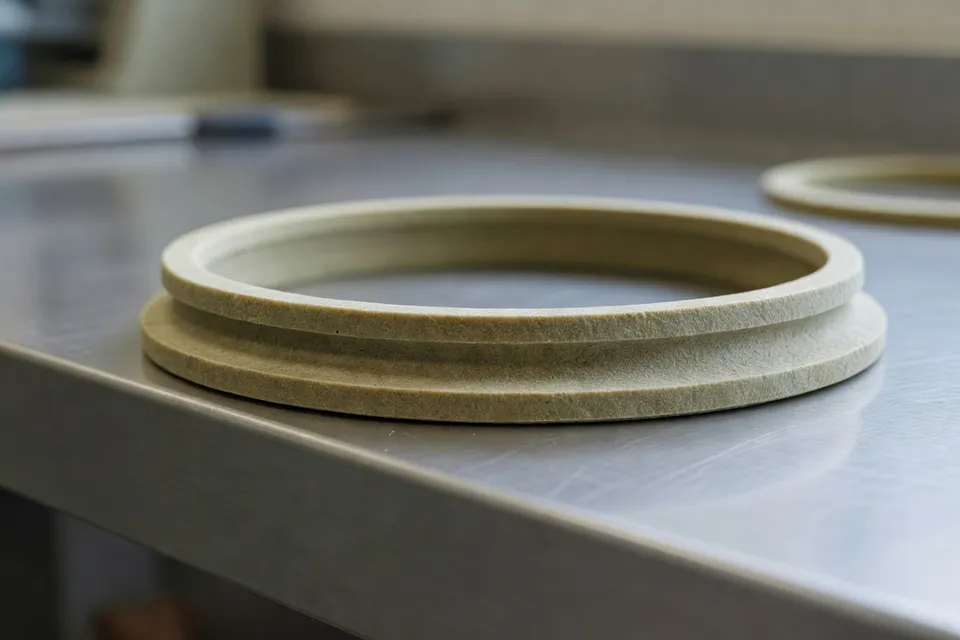
That is where broad sustainability language can mislead a plant team. A biobased elastomer still needs defined melt or solution behavior, stable mixing, predictable cure history, and a recovery stream that does not require a purity level the recycler cannot achieve. The useful result is therefore the combination of renewable starting material with a reversible or cleavable polymer structure—not the renewable label by itself.
The reporting on silicone recycling points to the same separation. Chemical treatment can convert silicone waste into reusable building blocks, but the process must prove that the recovered material has the molecular-weight distribution, functionality, and cleanliness needed for the next product. A block recovered from waste is not equivalent to a qualified silicone intermediate until the next formulation passes its specification.
What thermoplastic processing already solves
Thermoplastic vulcanizates remain the practical benchmark because they already place rubber-like performance inside a reprocessable processing format. Their morphology matters: a vulcanized elastomer phase is dispersed in a thermoplastic phase, allowing the compound to flow during heating while retaining elastic behavior after cooling.
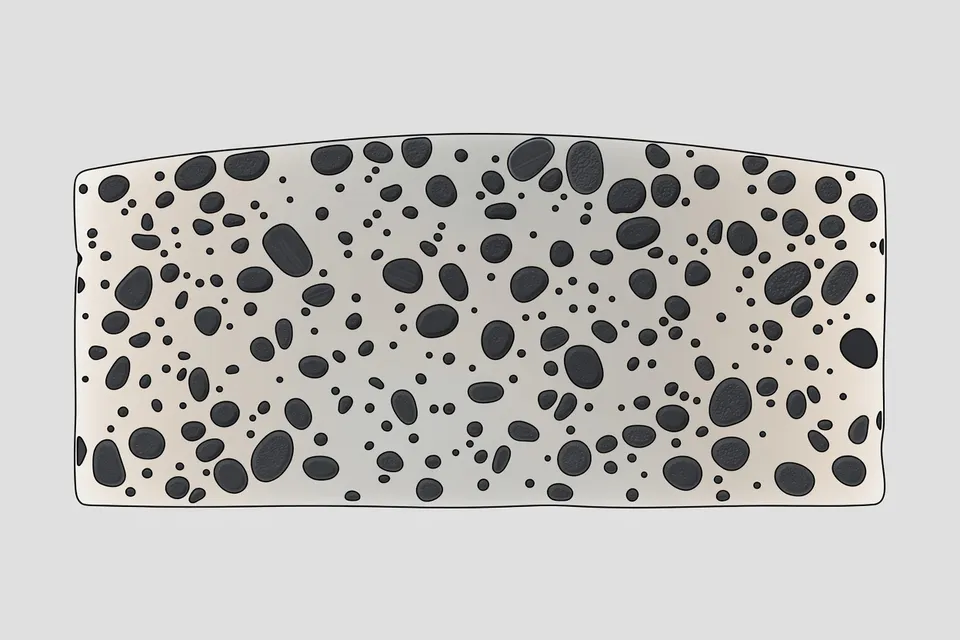
That architecture gives processors a familiar sequence—feeding, melting, mixing, shaping, and cooling—but it does not erase the usual limits. Repeated thermal history can alter the thermoplastic phase, the rubber morphology, or the interface between them. A converter still needs torque data, residence-time limits, dimensional control, and a defined regrind fraction before approving closed-loop use.
Marine-waste-derived thermoplastic elastomers extend the same processing logic while adding a feedstock constraint. The recovered plastic must be consistent enough to support compounding. If salt, contamination, oxidation, or mixed-polymer content changes from lot to lot, the elastomer formulation inherits that variation. The material claim is strongest when the recycling and compounding steps are specified together; it is weakest when waste input is treated as a uniform resin.
The qualification gate
Applications in automotive and industrial components expose the gap between a promising formulation and a commercial elastomer. A new TPE developed for Bosch, for example, must meet more than tensile strength. It needs controlled hardness, compression set, heat aging, oil or chemical resistance, dimensional stability, and repeatable processing. The buyer's qualification gate is the real test of reprocessability because it measures whether recovered or reshaped material can still perform in the same object.
That standard should also govern the newer dynamic networks. A successful paper-scale cycle is not enough. The next trial should run the material through a defined number of heat histories, then compare the same specimen geometry and test methods against virgin material. It should report what failed first: modulus, elongation, tear strength, compression set, color, odor, or process stability.
The present evidence supports a direction, not a finished replacement for cured rubber. Dynamic covalent networks offer a route to controlled rearrangement. Self-immolative polymers offer a route to chemical recovery. Biobased elastomers address feedstock origin. Thermoplastic vulcanizates and recycled-plastic TPEs offer the nearer processing reference. None of those mechanisms, by itself, proves a commercial closed loop.
The next credible milestone is a shared processing and qualification window: a named formulation, a defined thermal history, repeated cycles, recovered-material characterization, and an end-use specification that remains satisfied. Until that gate is passed, reprocessable elastomers should be treated as engineered candidates—promising because the bond architecture is changing, but still unproven where the line, the buyer, and the recycler meet.
Editorial Insights
- What processing data must be fixed before calling a dynamic elastomer reprocessable?
- Refuse the label until the processing map is written down: activation temperature, dwell time, atmosphere, stress history, reshaping method, and permitted cycle count. Separate the bond that carries service load from the bond that exchanges or yields, then measure which property falls first after repeated heat histories. A sample that survives one remolding is not evidence of a usable production window; the usual failure is approving reprocessing before dimensional stability, strength retention, and process torque have been checked together.
- How should a self-immolative elastomer be screened before it enters compounding or molding trials?
- Ask the supplier to demonstrate that the trigger remains inactive during compounding, compression molding, service-temperature exposure, and contact with moisture or additives. The recovery step must then activate predictably and leave a feedstock with defined cleanliness and molecular characteristics. A clean laboratory depolymerization proves little if the trigger starts during residence in the mixer or if the recovered material changes from batch to batch.
- Does a biobased monomer make an elastomer recyclable by itself?
- No. Verify the bond design, recovery route, mixing behavior, cure history, and recovered-material specification separately. A renewable starting material can reduce fossil feedstock demand while leaving the finished network difficult to reclaim. The common buying mistake is to approve the origin claim before confirming that the recovery stream can meet the purity, functionality, and processing requirements of the next formulation.
- What must be measured before approving regrind in a thermoplastic elastomer compound?
- Run defined regrind fractions through the actual feed, melt, mixing, shaping, and cooling sequence, while recording torque, residence time, dimensions, and final morphology. Compare each fraction with virgin material using the same specimen geometry and tests; thermal history can damage the thermoplastic phase, alter the rubber dispersion, or weaken the interface even when melt flow still appears acceptable. Approval fails when the resin line is monitored but the recovered rubber phase is not.
- Which qualification records should a buyer require before accepting a reprocessable elastomer for a component?
- File the formulation, thermal history, number of recovery cycles, recovered-material characterization, processing settings, and end-use test results as one qualification record. Include hardness, compression set, heat aging, chemical resistance, dimensional stability, and repeatability—not tensile strength alone. The record should identify the first failed property, whether modulus, tear, color, odor, or process stability, because a material can pass a laboratory strength check and still fail the buyer’s geometry or aging requirement.
References
- 1.ACS Publications. Recyclable soft elastomers derived from biobased materials. ACS Publications.
- 2.ACS Publications. Depolymerizable and reprocessable self-immolative polymers. ACS Publications.
- 3.ACS Publications. Dual dynamic sacrificial networks enable durable materials. ACS Publications.
- 4.Phys.org. Chemical recycling turns silicone into reusable building blocks. Phys.org.
- 5.MIT Technology Review. Melt it, spin it, use it again. MIT Technology Review.
- 6.Plastics Engineering. Thermoplastic vulcanizates expand rubber processing options. Plastics Engineering.
- 7.Renewable Carbon News. Neuer Ansatz für nachhaltige Kunststoffe. Renewable Carbon News.
- 8.Plastics Technology. Audia Elastomers develops thermoplastic elastomers based on marine waste plastics. Plastics Technology.
- 9.Rubber World. Hexpol develops new TPE materials for Bosch. Rubber World.