

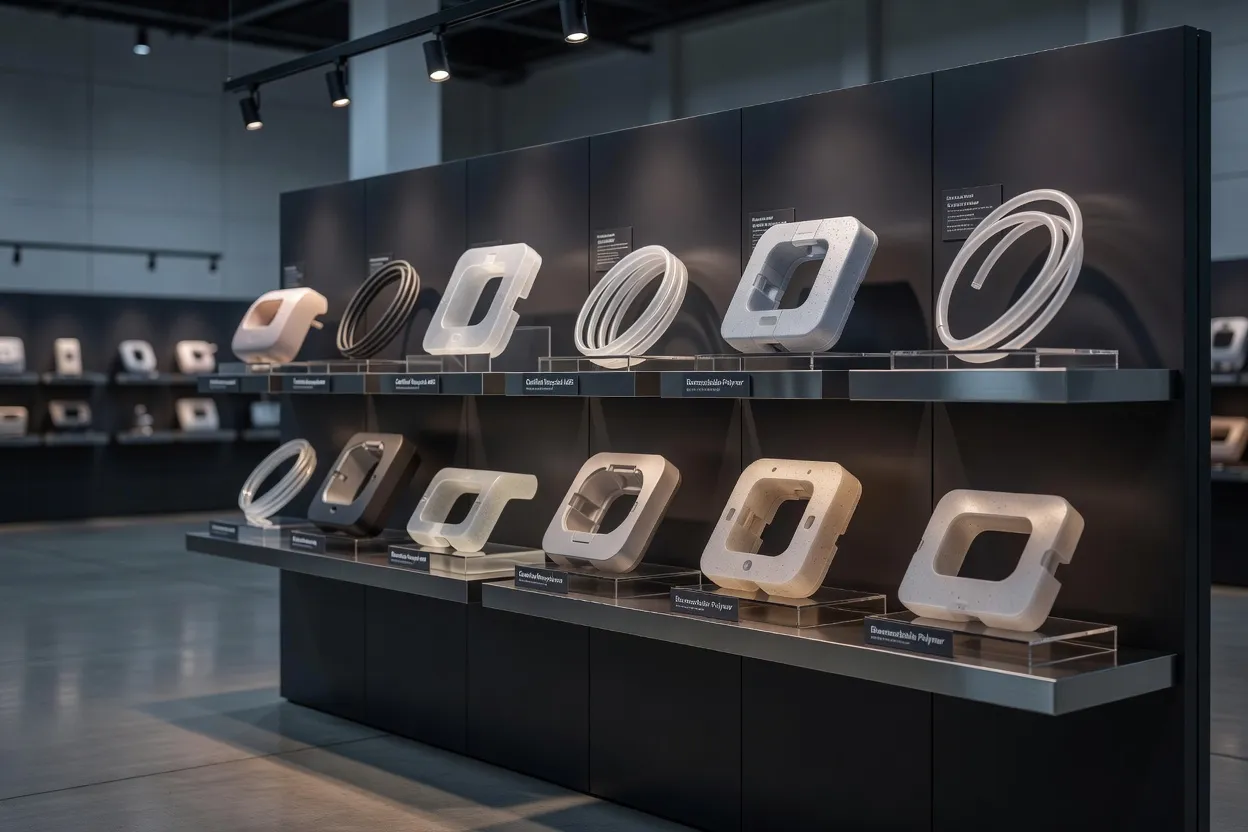
IMCD Group (a specialty chemicals and ingredients distributor and formulator) is using COMPAMED 2026 in Düsseldorf, Germany, to put three medical-polymer routes in front of device manufacturers: an ISCC Plus-certified ABS, renewable-based polyolefins for laboratory consumables, and bioresorbable polymers for implantable devices. The company's Advanced Materials team and supplier partners are exhibiting at Stand D01 in Hall 8B during the November 16–19 show.
The stand matters because it separates three different compliance and processing questions that are often bundled together under the word “sustainable.” The first material is a medical-grade ABS with certified recycled content allocated through a mass-balance system. IMCD says the grade is pre-colored, so a manufacturer can avoid a separate coloring step. That may reduce a conversion operation, but the stand presentation is not a production validation. It does not establish cycle-time savings, finished-device performance, or approval of a particular device design.
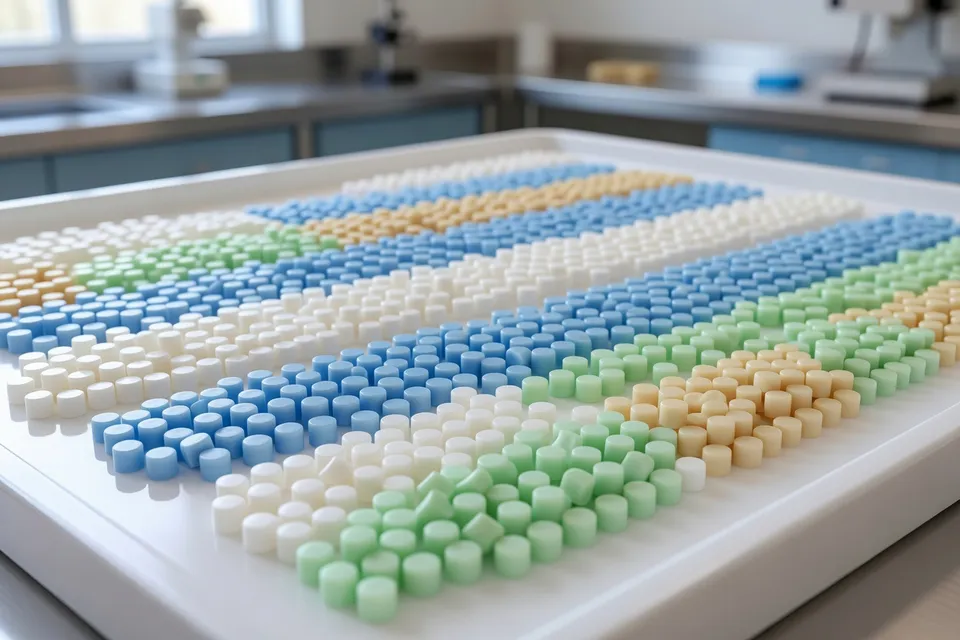
The second offer is a renewable-based polyolefin positioned as a drop-in option for laboratory consumables. IMCD says the material keeps the same grade name, certifications, packaging, and labeling as the conventional counterpart. That is a practical switching message for processors: the proposed change is intended to limit disruption to qualification and purchasing routines. It still leaves the converter with the work that a booth cannot close—confirming resin traceability, processing behavior, sterilization compatibility, and final-product performance in the actual consumable.
Bioresorbable polymers form the third part of the display. These materials are intended for implantable devices that can break down in the body after serving their purpose, potentially avoiding a second surgery to remove the implant. IMCD says the breakdown rate and material properties can be tailored to the application. For medical designers, that statement identifies the engineering task rather than finishing it. A tailored degradation profile must be matched with mechanical retention, biocompatibility, sterilization, shelf life, and the clinical use case before a material can move beyond a development discussion.
The certified ABS route
The ABS solution carries ISCC Plus certification and uses mass-balance allocation for its recycled content. The pre-colored format gives the proposal a defined process advantage: color is incorporated before the material reaches the device maker, rather than added in a separate operation. That is the clearest manufacturing claim at the stand.
| Material solution | Certified or functional feature | Medical use indicated |
|---|---|---|
| Medical-grade ABS | ISCC Plus; mass-balance recycled content; pre-colored | Medical devices |
| Renewable-based polyolefin | Drop-in format with existing grade identity and documentation | Laboratory consumables |
| Bioresorbable polymer | Adjustable breakdown rate and material properties | Implantable devices |
The table shows why these materials should not be treated as one interchangeable sustainability package. ABS addresses recycled-content allocation and coloring; the polyolefin addresses a potential material switch with familiar documentation; the bioresorbable polymer addresses end-of-life behavior inside the body. Each requires a different verification plan.
The drop-in claim
For the polyolefin, the strongest message is not a performance number but continuity. Keeping the same grade name, certifications, packaging, and labeling is designed to make the transition easier for manufacturers of laboratory consumables. That could matter where a processor wants a renewable feedstock route without redesigning its supply-chain documents around a new commercial grade.
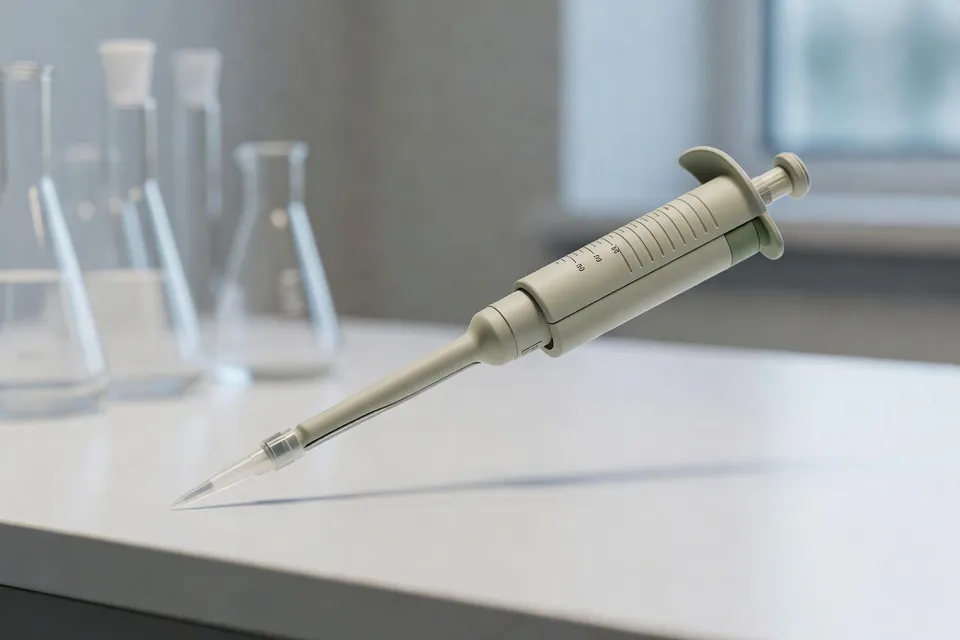
Still, “drop-in” should remain a qualification starting point, not a purchase order. Medical processors will need to confirm whether the renewable-based material behaves identically through molding, extrusion, welding, or other operations used for the specific consumable. They will also need to check whether the stated certification package covers the finished article, not merely the incoming resin. IMCD's COMPAMED display identifies the intended route; it does not report a plant trial, a customer approval, or a measured conversion result.
The implantable material
The bioresorbable option carries the highest technical burden. A polymer that disappears after implantation must do so at the right rate and without undermining the device's function before the clinical task is complete. IMCD's description that degradation and material properties can be tailored is therefore useful as a design premise, but it is not a qualified grade for every implant application.
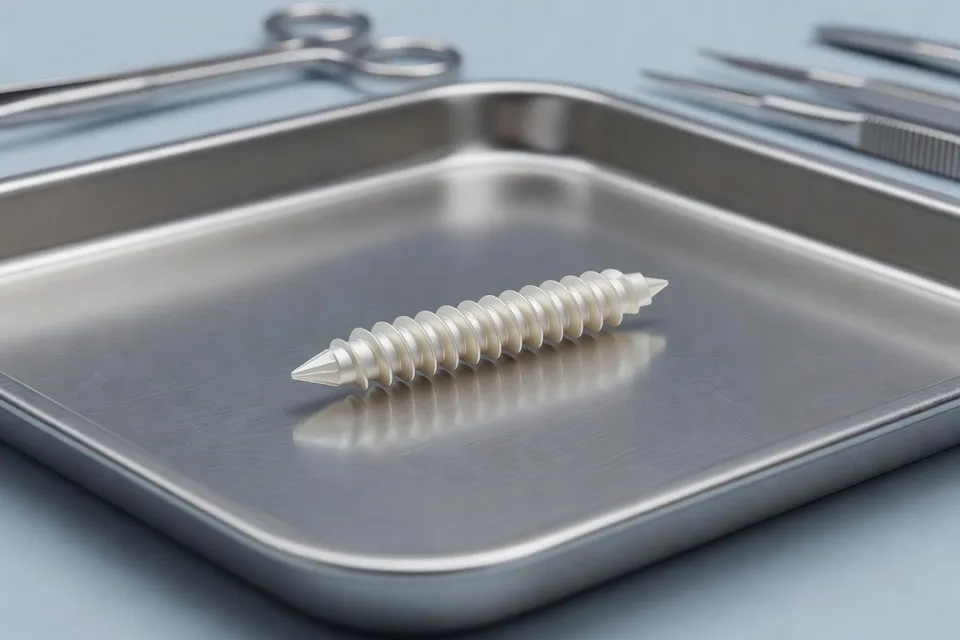
The verification target is application-specific. A device maker would need data that links composition and processing to degradation behavior, mechanical performance, sterilization, and biological response. None of those results is reported in the COMPAMED announcement summarized here. The responsible reading is narrow: IMCD is showing a platform for implantable-device development, not claiming that one material solves every resorption schedule.
IMCD's wider medical-grade portfolio covers surgical instruments, medical tubing, drug delivery, diagnostics, and packaging. Those applications broaden the supplier conversation at Stand D01, but they do not erase the differences between a certified recycled-content thermoplastic, a renewable polyolefin for consumables, and a bioresorbable implant polymer.

COMPAMED 2026 therefore gives processors three distinct questions to take back to qualification teams. For the ABS, they should ask what the mass-balance certificate covers and whether pre-coloring meets device requirements. For the polyolefin, they should test the claimed continuity against their own process and sterilization cycle. For the bioresorbable polymer, they should demand application-specific degradation and performance data before treating the material as ready for a medical device.
The event runs through November 19, 2026, at Messe Düsseldorf. No later qualification date, customer launch, or follow-up trial window has been announced in the material available for this report; any such development will require a separate article.
Editorial Insights
- What must be checked before treating mass-balance recycled content in medical ABS as a validated claim?
- Ask for the current ISCC Plus certificate, the scope of the mass-balance allocation, the chain-of-custody records, and the material documentation that applies to the intended device. Do not file the certificate as proof of finished-part approval: it does not establish molding performance, biocompatibility, sterilization compatibility, or regulatory acceptance of a particular design. The usual failure is that procurement verifies the resin certificate while quality assumes the finished article inherits every claim automatically.
- Does a pre-colored medical ABS actually reduce conversion cost?
- Refuse to book the saving until the line trial compares color consistency, cycle time, purge frequency, scrap, and incoming material cost against the current color-addition route. Pre-coloring can remove a dosing or compounding step, but it may also reduce color flexibility or create minimum-order and inventory exposure. A booth demonstration does not prove that the saved operation outweighs extra grade management, and the common miss is counting labor removed while ignoring purge material and obsolete colored stock.
- What does a drop-in renewable polyolefin still require before a laboratory consumable can be released?
- Run the material through the actual molding, extrusion, welding, or assembly process, then verify dimensions, joining strength, appearance, sterilization response, and finished-product performance. Match the resin lot and processing records to the qualification file, and confirm that the certification package covers the article rather than only the incoming polymer. “Same grade name” simplifies purchasing, not validation; the failure mode is switching the resin line while leaving the old process window and sterilization evidence untouched.
- How should a device team set a qualification plan for a bioresorbable polymer?
- Start with the clinical service interval and define the required degradation profile before selecting processing conditions. Measure how composition and processing affect mass loss, mechanical retention, sterilization, shelf life, and biological response, then connect those results to the device geometry and use case. A tailored breakdown rate is not a release specification by itself. The dangerous failure is optimizing disappearance in a laboratory test while the implant loses strength before the clinical function is complete.
- Which documents should change first when a medical processor evaluates the renewable-based polyolefin?
- File the supplier’s grade identity, certification set, traceability method, packaging and labeling records, and change-control assessment before placing production material on the line. Then map those documents to the specific consumable, process, sterilization cycle, and customer approval requirements. Keeping familiar packaging and labels reduces administrative disruption, but it does not eliminate ownership of the qualification decision. The usual gap is an updated purchasing record with no corresponding revision to the process-validation or finished-device file.
References
- 1.David Hutton. (2026, November 10). IMCD showcases three medical-grade material solutions. PlasticsToday.
- 2.COMPAMED. Medical functional materials. COMPAMED.
- 3.COMPAMED. COMPAMED. COMPAMED.
- 4.Covestro. COMPAMED. Covestro.
- 5.Polymerupdate. Polymerupdate press release. Polymerupdate.
- 6.Adsale CPRJ. News article. Adsale CPRJ.
- 7.COMPAMED. Exhibitor product information. COMPAMED.
- 8.MER Europe. COMPAMED 2026. MER Europe.