


Dunlop Tyre Europe GmbH has entered the final phase of implementation for the European Union Deforestation Regulation, with the rule applying to large and medium-sized companies from Dec. 30, 2026. The company's work covers natural rubber used in tire production and has moved beyond policy preparation into operational controls across import, goods receipt, warehousing, shipment and export.

The deadline is a compliance date, not a voluntary target. For tire makers placing covered products on the EU market, the practical test will be whether required due-diligence information can be linked to the relevant rubber supply chain and transferred through the prescribed digital process. Dunlop's progress shows what that process now requires: connected enterprise, regulatory, logistics and barcode systems; validation when goods arrive; and a documented route for Due Diligence Statements.
The goods-receipt control
Dunlop Tyre Europe has completed integration between its SAP environment, the EU information system TRACES, and its logistics and barcode systems. It has also implemented a validation process at goods receipt. That point matters because an EUDR file cannot be treated as a document that sits separately from the physical material. The incoming rubber must be matched to the information used to demonstrate compliance.
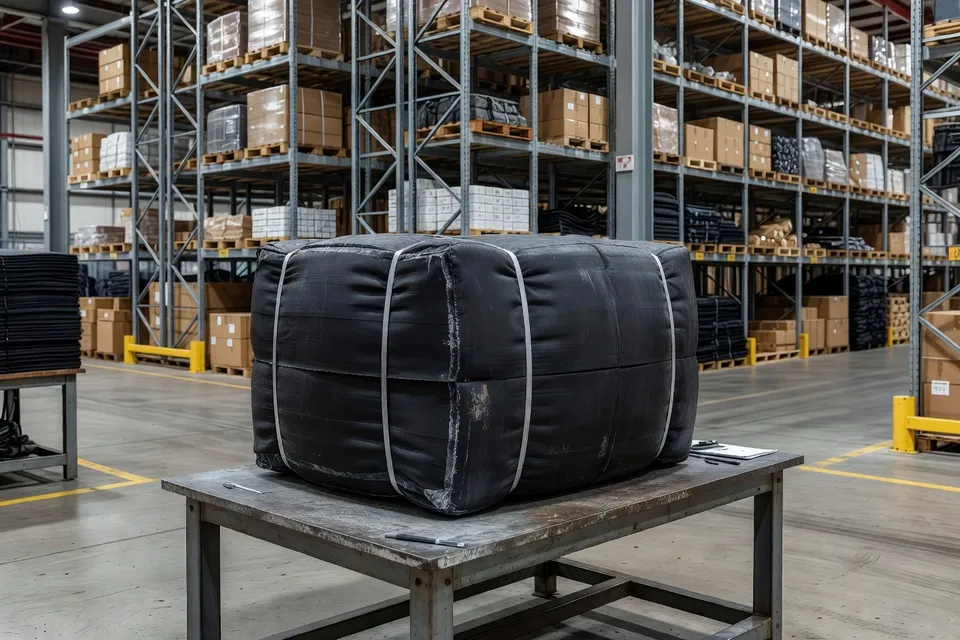
Dunlop says testing has been completed across its supply chain processes, data and interfaces. The company can now provide and transfer Due Diligence Statements along the supply chain, allowing it to operate both as an importer and as a downstream operator while using validated upstream information.
That is the part processors and tire plants should examine closely. A supplier declaration alone does not describe the full operating control. The receiving organization still needs a method to validate incoming data, connect it to the material received, and preserve the record through later movements. If the interface fails, or if the data cannot be associated with the delivery, the compliance problem arrives at the warehouse door rather than at the legal department.
The regulation's central demand remains traceability and deforestation-free supply chains for covered commodities and products. Natural rubber is the relevant commodity for the tire application described here. The rule therefore reaches the rubber input and the products that fall within its coverage, rather than creating a blanket prohibition on all rubber or all tires.
The December cutoff
Dunlop's program is scheduled around Dec. 30, 2026, when the requirements apply to large and medium-sized companies. The company has not treated that date as the start of preparation. It has already established the core process and is using the remaining period to improve execution.

Its stated priorities before the deadline are data quality, greater automation of verification, audit preparation and expanded digital connectivity with customers, including EDI-Wheel. Those are process changes, not marketing claims about sustainable sourcing. They identify the controls that still need to work under routine operating conditions.
| Readiness element | Current position before Dec. 30, 2026 |
|---|---|
| Supply-chain process | Established from import and goods receipt through warehousing, shipment and export |
| System connection | SAP, TRACES, logistics and barcode systems integrated |
| Goods-receipt control | Validation process implemented |
| Testing | Process, data and interface testing completed |
| Remaining work | Data quality, verification automation, audits and customer connectivity |
The table separates completed infrastructure from unfinished operating work. Dunlop has tested the chain, but it has not said that every future shipment will automatically pass without exception. Data quality and audit preparation remain open tasks. That is the boundary between readiness and proof in live compliance operations.
What the simplification changes
The European Commission's simplification package, published May 4, 2026, clarified the practical application of the regulation. The changes include reduced administrative effort when due-diligence information is shared along the supply chain, along with clearer definitions of roles, responsibilities and digital verification procedures.
The package does not turn the EUDR into a voluntary pledge. Nor does it remove the need for traceability or due diligence. It changes how information may be shared and how responsibilities are understood. Companies still need to know which role they occupy for a transaction and which information must accompany the material or product.
For rubber buyers, that means a leaner transfer process may reduce duplicate administration, but it does not excuse weak source data. A shorter workflow is useful only if the retained information remains sufficient for verification. Dunlop's decision to keep improving automation and data quality reflects that distinction.
The buyer's refusal point
The compliance question for a tire plant is not simply whether a supplier has issued a statement. The question is whether the plant can accept the material into its own controlled process with the statement, source information and digital record aligned. Goods receipt becomes the natural refusal point when those elements do not match.
Dunlop says it can demonstrate compliance as both an importer and a downstream operator by using validated information from upstream partners. That describes a functioning chain of responsibility. It does not transfer every obligation to the upstream supplier, and it does not make a downstream operator passive. Each role must be supported by the records and controls applicable to that role.
The likely reason the authority clarified information-sharing and role definitions is to reduce duplicate handling without weakening the evidence trail. That is a reading, not a stated motive. The operational result is clearer: companies need systems that move compliance data with the product, not teams that reconstruct it after a shipment is challenged.
What remains unproven
Dunlop has reported completed testing and established controls, but the report does not provide a shipment-level failure rate, audit result, or rejection figure. It therefore supports a conclusion about implementation status, not a conclusion that the entire natural-rubber supply chain is compliant.
That distinction should govern procurement decisions before the deadline. A converter, tire maker or downstream operator can use Dunlop's model as a process benchmark, but it should not treat the model as evidence that another supplier has the same data quality, system connection or traceability coverage. The rule attaches to the covered transaction and product, not to an industry-wide assurance.
Dunlop's next task is consequently less dramatic than the original system build but more revealing: keep the records accurate when normal purchasing, receiving and shipping activity begins. On Dec. 30, 2026, the requirement will not be whether a company has announced readiness. It will be whether the rubber and the digital evidence can pass through the same controlled chain.
Editorial Insights
- What should a tire plant verify before accepting a covered natural-rubber delivery?
- Refuse the receipt until the Due Diligence Statement, source information and physical delivery can be matched in the receiving record. The check should identify the relevant rubber lot or shipment and preserve the digital reference through warehousing and later movement. A supplier’s statement on its own is not enough; the usual failure is that the document exists but cannot be tied to the material unloaded at the dock.
- Does sharing upstream due-diligence information remove the downstream operator’s responsibility?
- No. First assign the company’s role for the transaction, then retain the information and controls required for that role. Upstream data can reduce duplicate entry, but the downstream operator still has to validate the record, connect it to the received rubber and transfer it correctly when the product moves onward. The common mistake is treating a supplier declaration as a complete compliance handoff.
- What systems need to be connected for EUDR control to work in routine plant operations?
- Connect the enterprise resource-planning record, the regulatory information system, logistics data and barcode or identification controls before claiming operational readiness. The integration must carry the compliance reference from import through goods receipt, storage, shipment and export, with a named exception process when an interface fails. A successful test proves the route can work; it does not prove that missing or badly formatted source data will be corrected automatically.
- What evidence is still needed after system and interface testing is complete?
- Measure live shipment exceptions, unmatched receipts, record corrections and audit findings after normal purchasing and shipping begin. File the results by delivery or lot so the business can show whether the digital record stayed aligned with the material, not merely that the interface once passed a test script. Testing can miss routine failures such as a supplier changing a data field, a barcode being rescanned incorrectly or a partial delivery losing its original reference.
- What does the EUDR simplification package change for rubber buyers?
- Use the leaner information-sharing route to remove duplicate administration, not to lower the evidence standard. Buyers still need the source information, transaction role and digital record required to verify the covered rubber and product. The friction is practical: a shorter workflow can hide a weak upstream record until an audit or shipment challenge exposes the missing link.
- Can one supplier’s readiness be used as proof that another natural-rubber supplier is compliant?
- No. Ask each supplier for transaction-level evidence and verify that its data can enter the plant’s own receiving and record-retention process. A working model demonstrates a control architecture, not universal traceability coverage or data quality. Procurement gets into trouble when a credible implementation example is treated as a substitute for checking the actual source record, delivery reference and role-specific obligations.
References
- 1.RubberWorld. (2026, November 20). Dunlop Tyre Europe advances EUDR readiness requirements. Rubber World.
- 2.EUDR Guide. Rubber. EUDR Guide.
- 3.TraceX Technologies. EUDR rubber compliance. TraceX Technologies.
- 4.HQTS Group. EUDR compliance checklist. HQTS Group.
- 5.BusinessLine. Rubber Board introduces self-registration facility for BSNR sustainability certification. BusinessLine.
- 6.The Economic Times. Tyre majors scout for rubber estates abroad. The Economic Times.
- 7.European Rubber Journal. Rubber and tire industry in numbers. European Rubber Journal.
- 8.European Rubber Journal. Global rubber production, consumption decline in first half. European Rubber Journal.